

Discernment | 10.29.2026
Your Art Needs an Alibi
Six ways to verify authentic fine art photography in the age of AI.
Your eyes have been fired from the verification department. Anyone with a keyboard and twelve dollars a month can now produce an image convincing enough to fool a room full of smart people. Seventeen fingers, garbled signage, skin like a shower curtain: all trained away while you were busy having a life.
AI has made parts of running my business easier, but it doesn't create my art. I earn every pixel, sometimes by missing an exit, driving 200 kilometers in the wrong direction, and circling an Italian tollbooth until the attendant and I are on a first-name basis.
AI has never done that for an image.
And as AI-generated art becomes increasingly convincing, visual inspection alone won't establish authenticity. Serious collectors need to look beyond the image to the evidence surrounding it.
Here are six things worth checking before spending real money on anyone's art. Mine included.
01Content Credentials: The Digital Fingerprint
Content Credentials provide a cryptographically signed record of a digital file's history, including edits and disclosed generative AI activity. They're useful evidence, although they can't independently prove a scene was captured by a camera. Missing credentials aren't proof of AI, either. But when credentials are present, you can see what they actually document by checking a supported image or file at Content Credentials Verify. Look for verified creator information and a documented editing history. Think of it as the digital portion of a much larger paper trail.
02Independent Recognition: The Gatekeepers
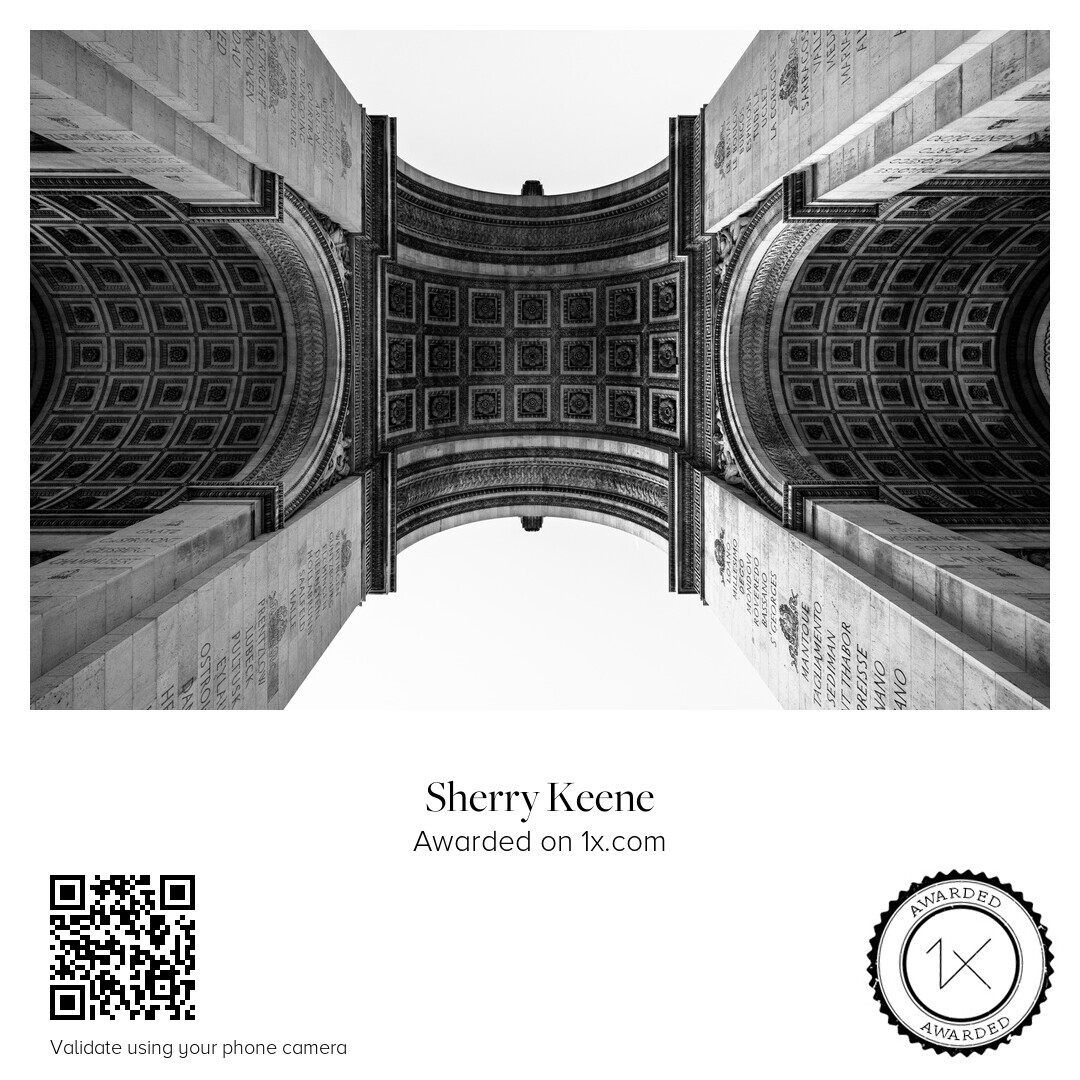
Curated platforms such as 1x.com and international juried photography competitions put work before experienced photographers and curators. 1x.com explicitly prohibits AI-generated submissions.
When a piece earns recognition among thousands of entries, people whose job involves evaluating art have already said yes. That's meaningful third-party validation, although it's not forensic proof of authenticity.
Better still, you can verify it. Follow the award to its source and look for the artist, the recognized work, and the competition's rules.
03Limited Editions: The Numbers Matter
A true edition declares its total size before you ask, backed by a commitment to honor that limit. "Limited edition" without a number attached is a bumper sticker.
Watch for separate editions at every print size. Twenty-five on paper, another twenty-five on acrylic, and twenty-five on metal means seventy-five works exist, not twenty-five. Separate editions are legitimate when disclosed, but the total matters.
Scarcity is part of what you're acquiring. A finite edition is a different proposition from a file that prints on demand like replicator tea. Earl Grey. Hot. Forever.
04Certificates of Authenticity: The Paper Trail
A Certificate of Authenticity should identify the artist, title, edition number, and specific work you've acquired. A unique serial number backed by edition records adds another layer of traceability.
That documentation matters to an appraiser, an insurer, or whoever inherits the wall. It connects the artwork to its creator and its place within the edition.
A generic packing slip is decoration cosplaying as provenance. You'll discover the difference at the worst possible time.
05Archival Materials: The Century Test
Cheap printing is a future problem disguised as a bargain. Fine art intended to last deserves materials and production methods chosen for longevity, whether the finished work is presented on archival paper, acrylic, or metal.
Professional labs don't all use identical papers, inks, or finishing processes, and they don't need to. What matters is the quality and suitability of the materials, the standards of production, and how well the finished piece will withstand the years. Durability also depends on how the artwork is displayed and cared for.
Look beyond vague promises of "premium" or "gallery quality." A reputable seller should be able to explain how the work is produced, what materials are used for the chosen presentation, and how to care for it. Those details tell you considerably more than a fancy label.
A work worth owning deserves craftsmanship that lasts, regardless of which professional lab produces it.
06The Artist: Follow the Human Trail
Look the artist up. A genuine body of work leaves a trail: a website, a catalog, publications, recognition, and the history of standing somewhere at 4 a.m. waiting for light that might never arrive, while a miniature schnauzer judges the entire operation from the dashboard.
Run a reverse image search. Explore their earlier work. Read the stories behind the pieces.
This is where collecting becomes personal. You might fall in love with an image because it reminds you of a place, a memory, or something you've dreamed of seeing. Knowing what happened behind the lens adds another dimension to that connection.
The rain, the missed turn, the unexpected moment when everything came together. Those experiences belong to the work's history, and they're part of what makes one artist's vision different from another's.
Now Hold Me to It
Every standard above is one I apply to my own work. My art begins with real places and moments I witnessed, and that commitment carries through to the finished piece. My numbered editions have permanent limits across sizes and materials, documented authenticity, and carefully selected production materials. My independent recognition provides another part of that history, available for anyone to verify.
Because when a piece becomes part of your home, and perhaps eventually part of your family's history, knowing where it came from should be just as satisfying as owning it.
Collect what you love. Just make sure you know what you're acquiring.
Sherry Keene | 10.29.2026